
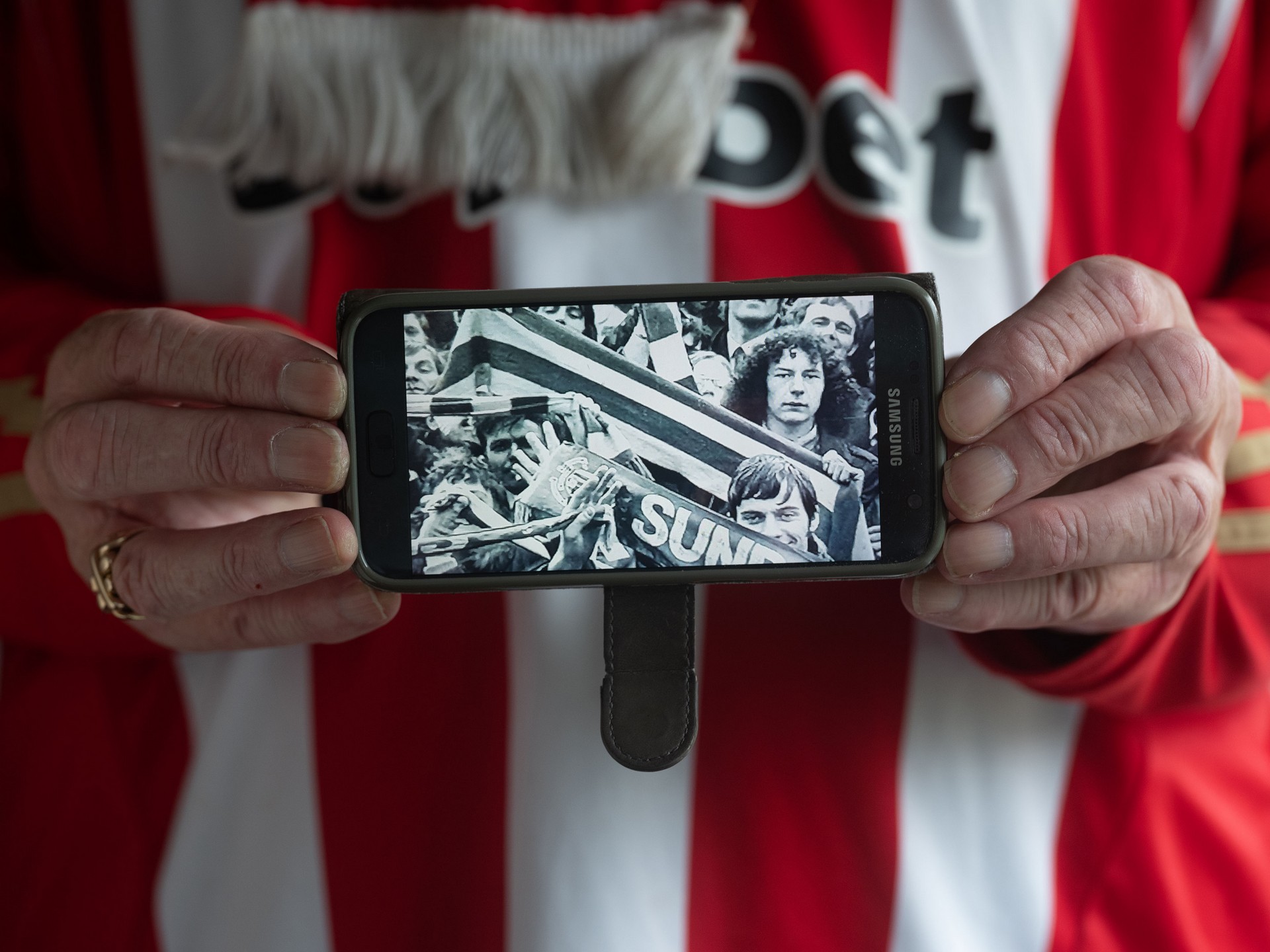
Julian Germain, from Sunderland ‘73: The People’s Visual History © Julian Germain
Friday 12 July 2024, on Zoom
A one-day workshop programmed in the context of Museum Dialogues, incorporating presentations, panel discussions and dialogue with international peers.
Museum Dialogues was initiated as a 12-month research networking project aiming to transcend the disciplinary boundaries of art history, visual culture, photography, new media, museum and curating studies and bridge theory and practice. Bringing together academic researchers and practitioners, the programme has supported the exchange of innovative solutions, inquiries, and practical challenges relating to the exhibition, collection, and interpretation of photography.
Theme
The third networking event of Museum Dialogues considered matters of curatorial interpretation and visitor experience, alongside ways of increasing access and representation of and for diverse communities. In the first part of the workshop, speakers and participants discussed various institutional initiatives for active public engagement and ways to value everyone’s experience by levelling equity with equality.
The session explored non-traditional exhibition spaces, engaging with audiences outside the museum, and collaborations between artists, curators, and communities as effective means of addressing access challenges and expanding the reach of photography. In the second part, presentations focused on the diversity of representation in exhibitions and collections, and strategies of decolonisation.
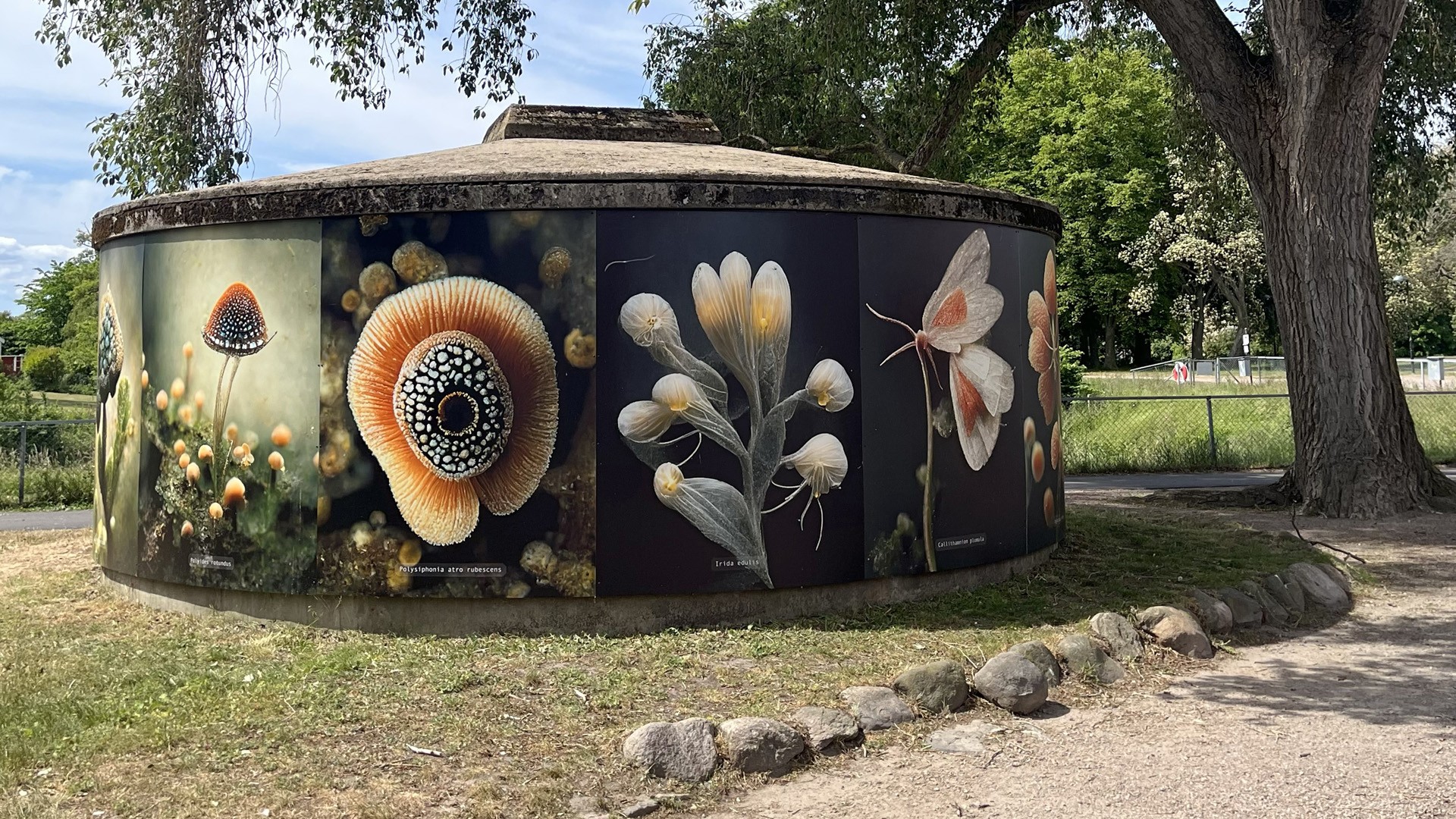
Craig Ames, Photographs of British Algae: AI Impressions © Craig Ames, installation view at Landskrona Foto, Sweden, 2023. Photo credit: Craig Ames
Overarching questions for presentations and group discussion included
· How can photography serve as an accessible medium to address broader social and political issues and processes relevant to diverse communities?
· What presentation and storytelling methods can provide more inclusive cross-cultural narratives and audience experiences?
· How can museum practices facilitate two-way interactions with audiences, enabling them to influence the museum’s role as a social site?
· What decolonial methods can museums and galleries use to allow for multiple interpretative frameworks?
· How can museums and galleries advance decolonising processes through photography and commissioning?
· How may commissioning open an institution’s discursive space?
Speakers
Dr Sandra Križić Roban, Matteo Balduzzi, Matthew Gansallo, Dr Emily Pugh, Dr Tracy Stuber, Dr Alexander Supartono.
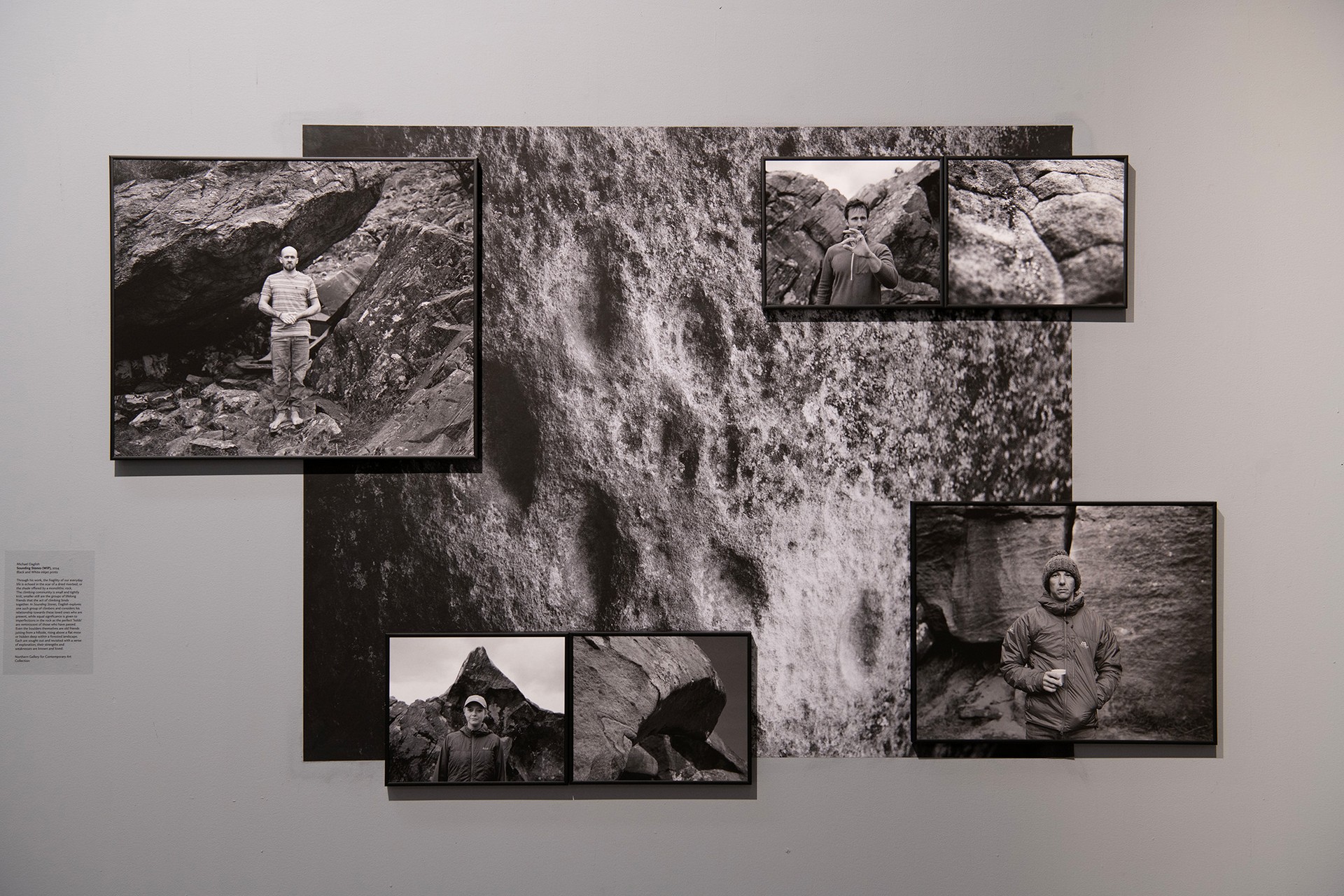
Michael Daglish, Sounding Stones, 2024 © Michael Daglish. Installation view in the exhibition The Skin We Live In, Northern Gallery for Contemporary Art, 2024. Photo credit: Michael Daglish.
Addressing the Institutional Void
Dr Sandra Križić Roban
Dr Sandra Križić Roban holds a PhD in art history and is a critic, curator, lecturer, PhD mentor, and writer, who focuses on contemporary art, history and theory of photography, post-war architecture, and politics of public space and cultural memory. Križić Roban is a senior scientific advisor in tenure at the Institute of Art History, Zagreb, and Assistant Professor of Culture of Memory at the Academy of Fine Arts, Zagreb, and of Photography and Visual Culture at the Philosophical Faculty, Osijek. She is the Principal Investigator of the HRZZ project Ekspozicija: Themes and Aspects of Croatian Photography from the 19th Century until Today (2020–2024), and the head of the Office for Photography, a non-profit association dedicated to contemporary photography in Zagreb. Križić Roban has authored a number of books, scientific articles, and book chapters on photography, especially women’s practice, cultural migration and conceptual photography, trauma and alternative ways of memorisation.
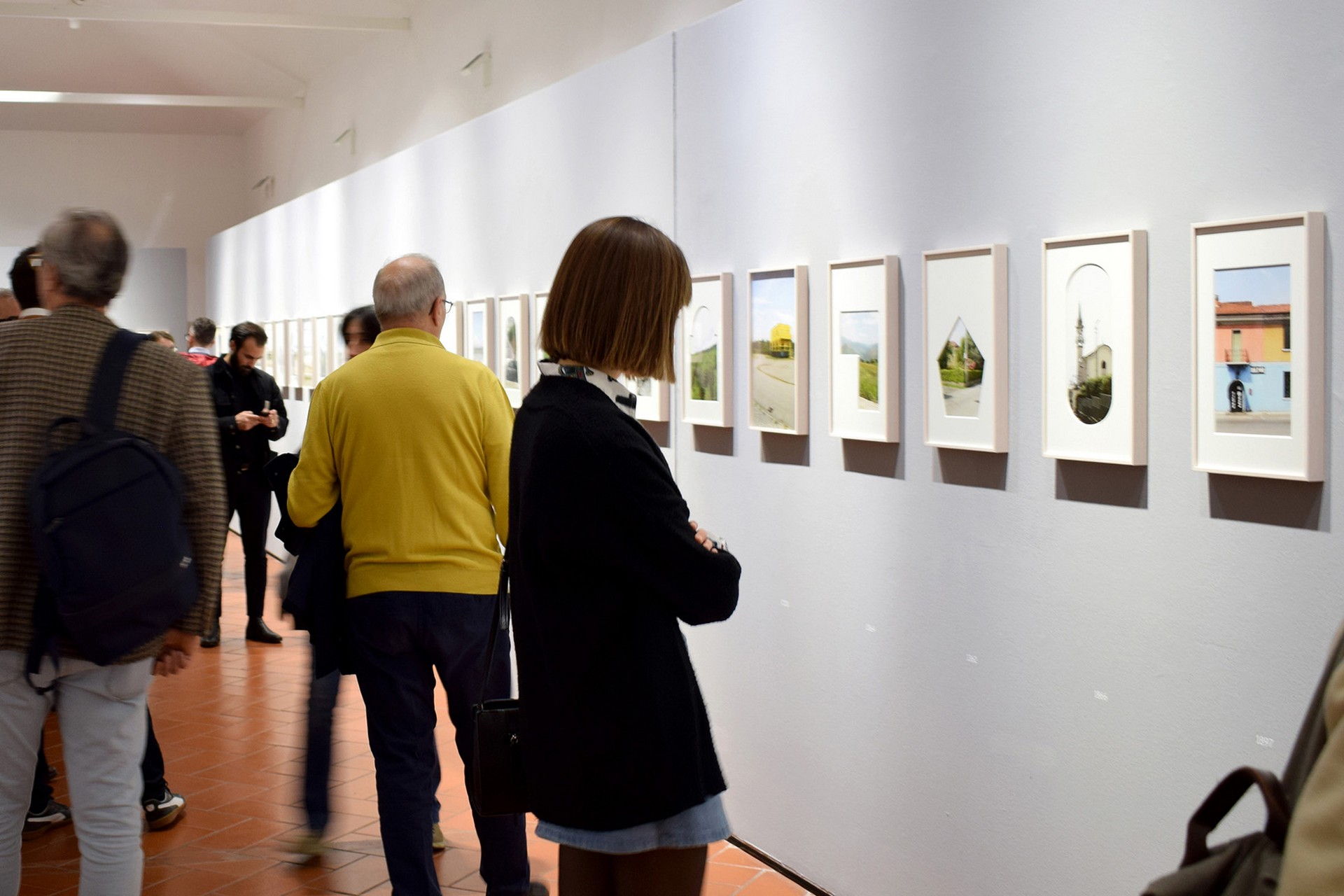
Claudio Beorchia, Tra cielo e terra, Lombardy 2019/2020 © Claudio Beorchia, exhibition opening, Museo di Fotografia Contemporanea, 2019. Photo credit: Mufoco.
The Civic Role of the Museum and Socially Engaged Practices
Matteo Balduzzi
Matteo Balduzzi is a curator in the field of public art and photography. For over fifteen years he has been collaborating with the Museum of Contemporary Photography (Mufoco) in Milan-Cinisello Balsamo, Italy, where he is a curator and has been the artistic programme coordinator since 2018. Mufoco is the only public museum in Italy dedicated to contemporary photography and seeks to promote its archival heritage through specific research projects, integrate the works of emerging artists within the museum’s collections, and develop new collaborative projects involving citizens and artists. In recent years, Balduzzi has curated numerous exhibitions and projects, including West, by Francesco Jodice, presented in Toulouse and Naples, L’Italia e’ un Desiderio at Gallerie del Quirinale in Rome, and Gabrielle Basilico: Le Mie Citta at Triennale Milano.
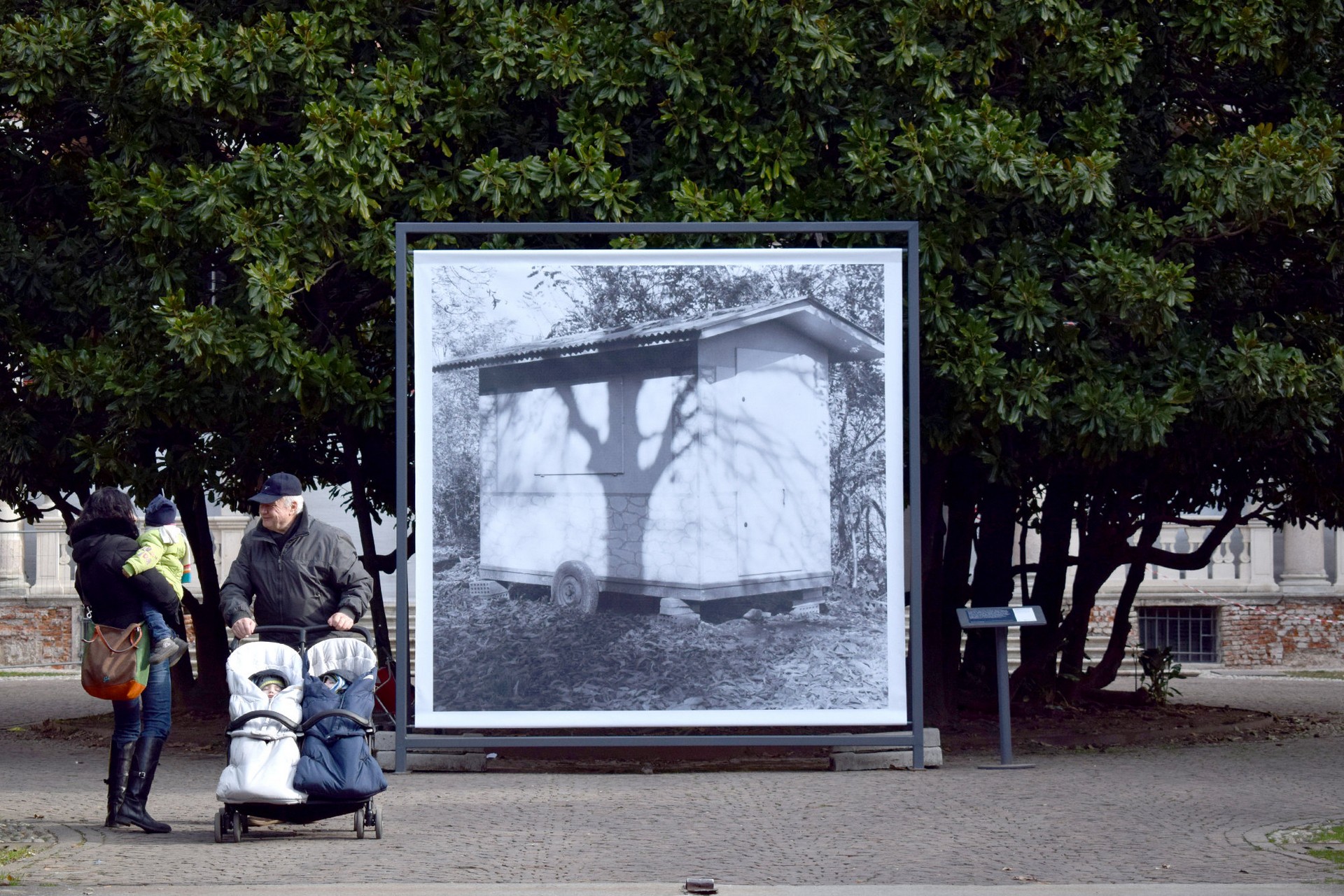
Me Museo, installation view of the exhibition at the Villa Ghirlanda Court, Cinisello Balsamo, 2018. Photo credit: Mufoco.
Taking the Museum to the Market Place
Matthew Gansallo
Matthew Gansallo is a curator, author, architect, designer, and museologist. He was a Senior Management Fellow (1998-2001) at Tate Britain, London and the first curator of Tate’s Net Art Exhibition (2000) and served as Education and Interpretation Consultant at Tate Britain and Tate Modern (2001-2003). He worked at the British Museum (2004-2010) and the Natural History Museum in London (2010-2015) as the founder and director of the Young Graduates in Museums and Galleries Education Programme, working with 11 national museums and over 50 UK secondary schools and 20 universities in the UK and Europe. Gansallo also founded the History, Culture and Heritage Institute Nigeria (HCHIN, 2017-present). He is currently completing PhD studies at the University of Sunderland.
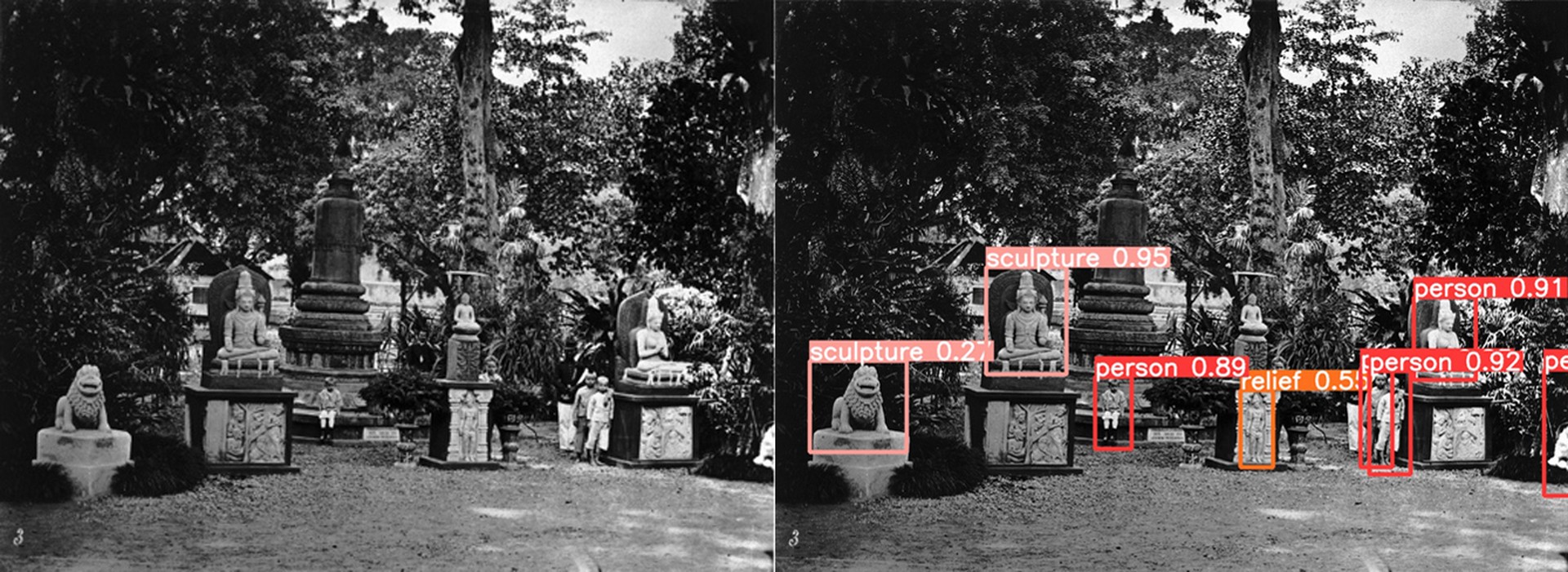
L: Kassian Céphas, Statues in the garden of the residence house of Djokjakarta, Yogyakarta, ca.1890, Wereldmuseum, the Netherlands. R: Kassian Céphas, Statues in the garden of the residence house of Djokjakarta, Yogyakarta, ca.1890, Wereldmuseum, the Netherlands (with figure recognition).
Photography Unbound
Dr Emily Pugh, Dr Tracy Stuber, Dr Alexander Supartono
Dr Emily Pugh received her PhD from the CUNY Graduate Center in New York City, where she focused on both postwar architecture and digital humanities. Since 2014, Pugh has led the Digital Art History department at the Getty Research Institute, overseeing research activities and projects including Ed Ruscha Streets of Los Angeles and PhotoTech, a project focused on art-historical photo archives. Her expertise within digital art history centres on the digital media of art history and its related infrastructures, which encompasses the digitisation of physical materials, 3D scanning, computer vision, as well as collections metadata and its related workflows and processes. Her work on architecture and digital art history has been published in the Journal of the Society of Architectural Historians, Space and Culture, the Journal of Digital Art History, and the 2022 edition of Debates in the Digital Humanities. She has received funding for her research from the Center for Architecture Theory Criticism History at the University of Queensland, the Center for Digital Humanities Research at Australian National University, and the Foundation for Landscape Studies.
Dr Tracy Stuber received her PhD in Visual and Cultural Studies from the University of Rochester. She is a Digital Humanities Specialist at Harvard University. She was a Research Specialist for the Digital Art History department at the Getty Research Institute, where she focused on the use of emerging technologies, such as computer vision and machine learning, to discover new research possibilities within photographic archives. Before joining the Getty, she was a Kress Interpretive Fellow at the George Eastman Museum. Her research in photography and digital humanities has been supported by the Andrew W. Mellon Foundation and Humanities New York.
Dr Alexander Supartono is an art historian and curator specialising in modern and contemporary art in Southeast Asia, currently working at the School of Arts and Creative Industries, Edinburgh Napier University. He obtained a PhD in the History of Photography from the University of St. Andrews, Scotland. Recent curatorial activities include Postcolonial Photo Studio 4 (Chobi Mela Festival, Dhaka, 2017) and Flame of Solidarity, the presentation of Taring Padi collective at the documenta fifteen (Kassel, Germany, 2022). Latest publications include the co-edited book Dolorosa Sinaga: Body, Form, Matter (2020) and the article “The Silent Waiting: Javanese Antiquity and 19th Century Photography in the Dutch East Indies” (2022).
47 network members attended this workshop.
13 countries represented: Australia, Finland, Germany, Greece, Indonesia, Italy, Latvia, Nigeria, Norway, Singapore, Spain, UK, USA.
Towards a Community of Practice
Three case studies presented contrasting participatory frameworks that use photography not only as an expressive medium, but also as visual communication that can widen access, connect communities, afford new decentralised interpretations, and enhance democratic processes within and outside the museum. Speakers shared innovative institutional collecting strategies and demonstrated how the establishment of strong, lasting relationships with creative practitioners and communities are fundamental steps towards decolonialisation. As an example of these two principles working together, Balduzzi offered the Salviamo la Luna project with artist Jochen Gerz, which resulted in the residents of Cinisello Balsamo becoming long-term custodians of works of art created through the project and therefore taking shared responsibility for Mufoco’s collection.
Discussions also examined the practical challenges pertaining to institutional cataloguing of collaborative, co-created public-generated work, and how established institutional hierarchies and normative processes pose still unresolved issues for decolonial practices that need to expand beyond curatorial work to drive systemic changes and acceptance of multivocality and dissent.
The Photography Unbound case study offered three perspectives on the use of computer vision for documenting and analysing photographs in collections and archives, offering new insights into historical and colonial representations, whilst exploring how to address bias inherent in machine learning.
In the discussion groups, the global dialogue sustained by the Museum Dialogues network was deemed crucial, with participants proposing to continue these debates through a ‘network of networks’ that would sustain the transnational community of practitioners and scholars and record innovative ways of working with photography within and outside institutions, supported by individual and institutional contributions.
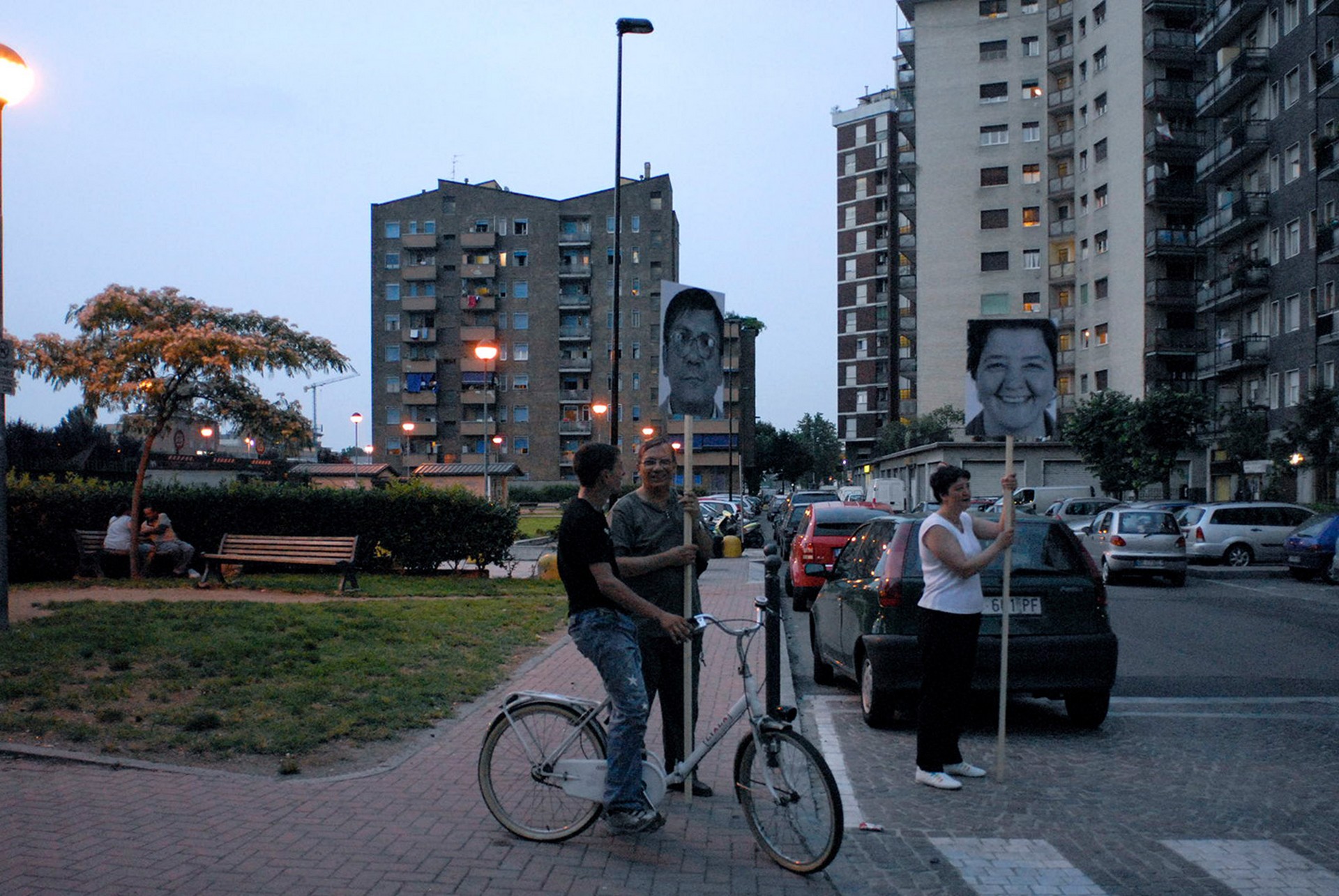
Jochen Gerz, Salviamo la Luna, 2005-2007 © Jochen Gerz, image of demonstration, Cinisello Balsamo, June 2007. Photo credit: Mufoco.