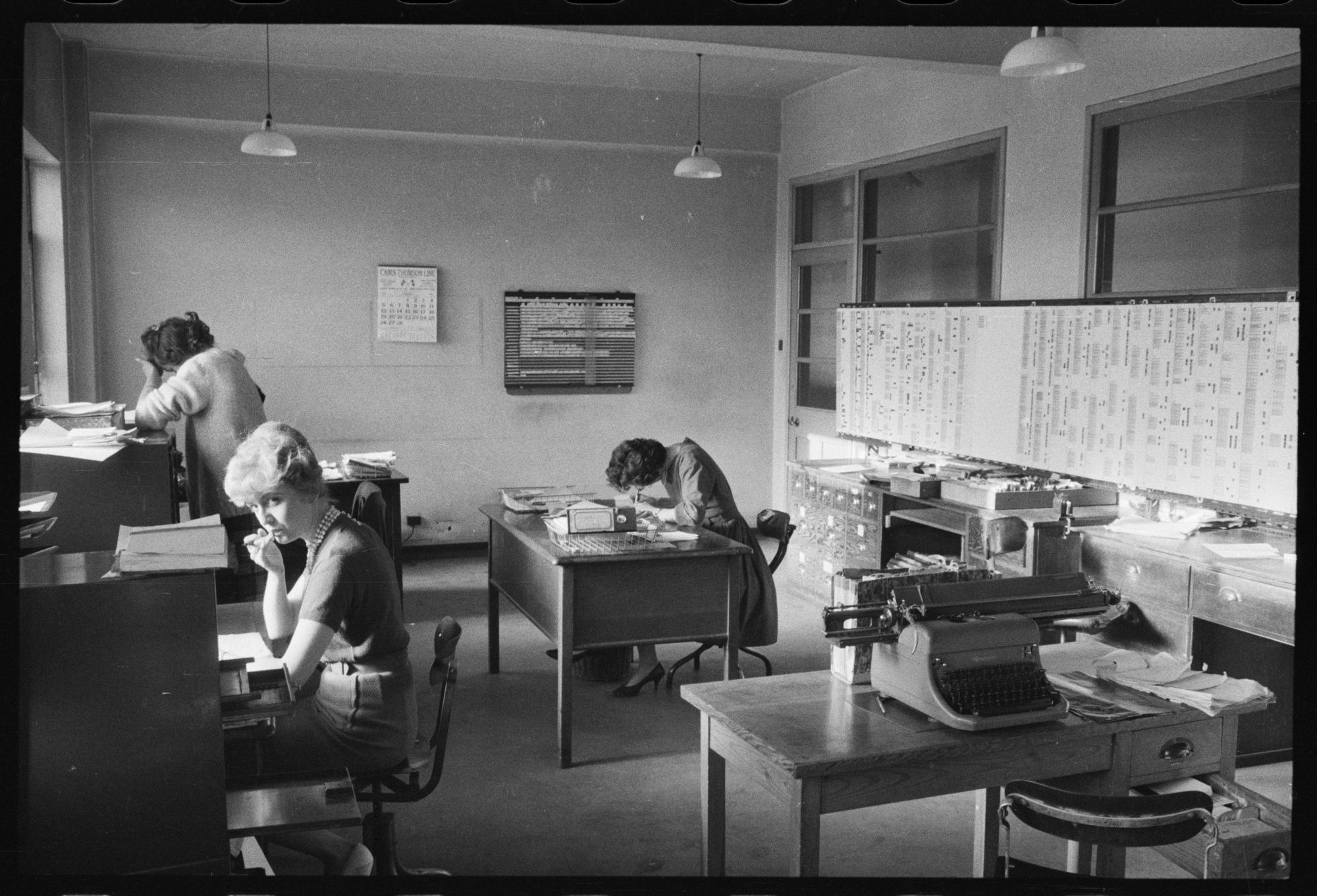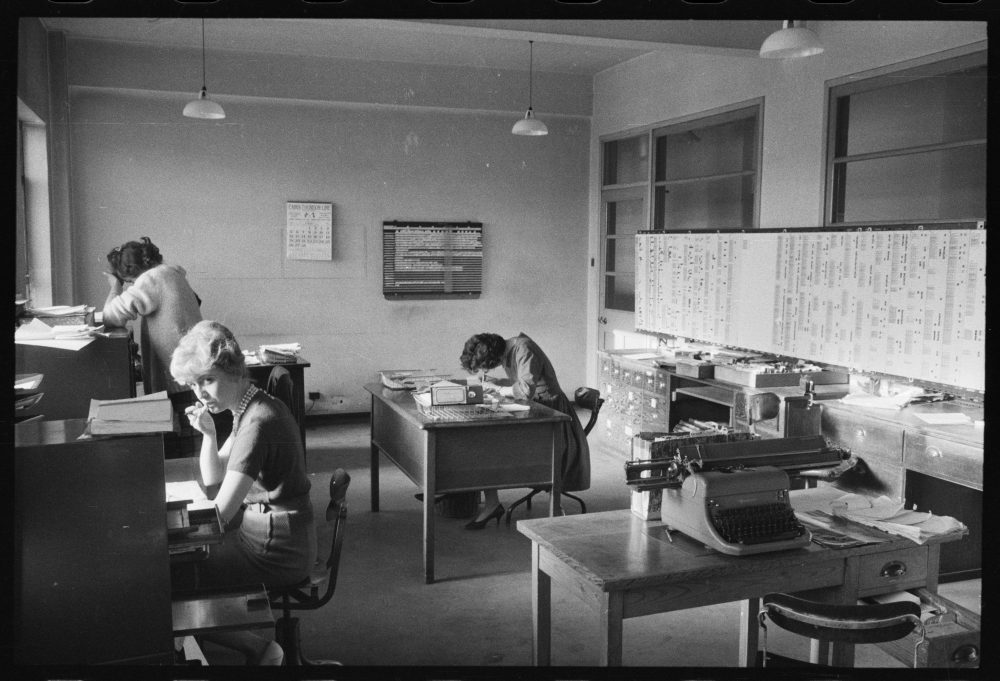
During 2026, Photographer and researcher Sophie Piper has been collaborating with women who worked at the ‘Pyrex Factory’ in Millfield, to expand and enrich the story of women’s work in Sunderland. Through a series of workshops, Sophie has been uncovering hidden photographic and oral histories using photographs taken by Eileen ‘Dusty’ Deste as inspiration.
James A Jobling & Co Ltd of the Wear Flint Glass Works obtained the license to produce Pyrex, a heat-resistant type of glass ideal for laboratory glassware and kitchenware in 1921, supplying it to all Commonwealth countries except Canada. They first made domestic products and then expanded into laboratory glassware. Due to the product’s success, Jobling’s swiftly became known as the Pyrex Factory. At the height of production in 1960, over 3,500 people worked there.
Eileen Dusty Deste was a commercial photographer from the 1930s -1970s. She had a personal interest in documenting regional industries, one of which was the Pyrex Factory in Sunderland. Deste visited the factory in January 1961 and took 488 photographs – the contact sheets and negatives are held within the Historic England Archive and available online at: www.historicengland.org.uk. Deste’s motivations for visiting the factory are unclear and there is no evidence of Deste’s photographs ever having been published in the media, in-house by Jobling’s or by Corning Glass Works, the American producer of Pyrex.
Guided by participants’ experiences, Sophie and Amanda Ritson of NEPN are co-curating a dispersed exhibition of Deste’s work to be presented in Sunderland in Spring 2027. The presentation will also include vernacular photographs and a commissioned soundscape produced by Grace Stubbings.
The project is produced in partnership with Sunderland Museum & Winter Gardens, Historic England and NEPN and is supported by University of Sunderland, UKRI and the National Lottery Heritage Fund as part of Sunderland Museum’s redevelopment.